

Bitcoin spent the last 48 hours doing what it does best when the world catches fire: confusing everyone. A pump to $63,700 vaporized the largest short stack since April, then geopolitics dragged it right back under $63,000. For traders, this is the kind of tape where conviction gets tested and stop-losses get hunted.
What Happened
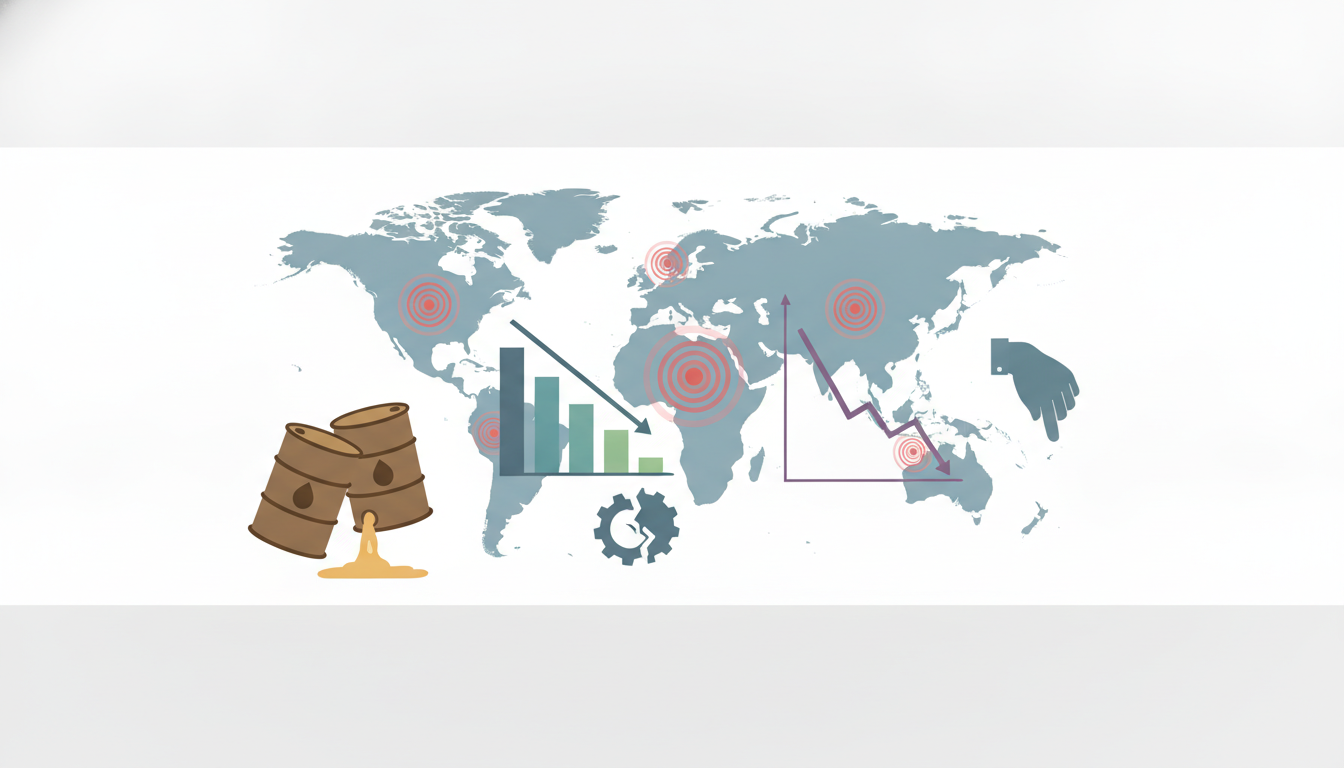
Bitcoin’s rally toward $63,700 triggered a wave of forced short covering, marking the heaviest short liquidation event since late April, according to CoinDesk’s derivatives desk reporting. The squeeze didn’t last. Within hours, headlines of fresh Iran-Israel exchanges and an 8% crash in South Korea’s KOSPI dragged BTC back under $63,000, with major altcoins following in lockstep as oil jumped 3% on supply fears.
The geopolitical layer is the dominant driver. Iran’s strikes on Israeli targets prompted Donald Trump to publicly float a peace deal timeline, with CryptoPotato noting the POTUS said an agreement was expected at the start of the new week. Risk assets across Asia took the brunt — Korean equities led the panic, and CoinDesk flagged the correlation between the KOSPI bloodbath and BTC’s intraday reversal.
Why It Matters
Short liquidations of this size usually signal one of two things: a genuine trend change or a violent mean-reversion bounce inside a larger downtrend. Given that BTC immediately gave back its gains on macro headlines, the second interpretation is winning. NYDIG’s research team, cited by CoinDesk, argues the recent slide has no single villain — AI rotation, tech IPO supply, quantum computing fears, and Strategy’s reported share sale are all stacking pressure simultaneously.
That’s the uncomfortable truth for bulls. When there’s no single cause, there’s no single fix. A ceasefire announcement could spark a relief rally, but it wouldn’t address structural headwinds like ETF outflows or institutional rotation into AI equities.
Institutional Mood Has Flipped
Compare February’s euphoria to today. CoinDesk’s institutional desk highlights how desks that were chasing $70K targets four months ago are now quietly de-risking. Same price zone, completely different posture. That kind of sentiment flip rarely reverses in a single session.
Market Context
As of writing, BTC trades at $63,007 (+1.91% 24h), ETH at $1,666.11 (+3.72%), and SOL at $65.59 (+2.05%). The green prints are misleading — they reflect the short-squeeze bounce, not a clean trend reversal. ETH outperforming BTC by nearly 2x on the day is a classic high-beta relief signature, the kind of move that often fades when Asian markets reopen.
The $63K level is now the pivot. Lose it convincingly and the next liquidity pocket sits considerably lower. Reclaim $64.5K with volume and the squeeze has legs.

What Different Outlets Are Saying
The narrative split across outlets is instructive.
- CoinDesk is leaning macro and structural — geopolitics, oil, institutional rotation, and the NYDIG multi-cause thesis.
- The Block framed the bounce as technical noise. Presto’s Min Jung told The Block the KOSPI crash had «some impact but not substantially» on BTC’s recovery, downplaying the cross-asset linkage.
- Cointelegraph is the most chart-driven, with analysis pointing to a potential rally toward $92,630 if BTC holds long-term support — though that scenario is heavily contingent on the Nasdaq not breaking down further.
- CryptoPotato stayed closest to the headline driver, framing the price action almost entirely through the Iran-Israel-Trump lens.
Put together, you get a coherent picture: technicals say bounce, derivatives say squeeze, macro says caution, and institutional flow says distribution. Those four signals don’t reconcile cleanly, which is exactly why the tape is whipsawing.
Trader Takeaway
After twenty years watching markets, my read is simple: this is a headline-driven chop zone, not a trend. Short-squeeze bounces inside a deteriorating macro backdrop are traps for momentum buyers and gifts for patient sellers — until the structural overhang (Strategy supply, ETF flows, AI rotation) clears, rallies are for trimming, not chasing. If you’re sizing positions here, respect the geopolitical tail risk and keep leverage well below your normal book. Traders interested in derivatives venues like OKX, Bybit, or Bitget can compare current referral offers on our exchange pages.
Popular Exchange Referral Codes
- Bybit Referral Code 2026: Get 20% Fee Discount for 90 Days with Code 19670
- Bitget Referral Code 2026: Get 20% Trading Fee Discount with Code t4685009
- OKX Referral Code 2026: Get 20% Trading Fee Discount with Code 64912533
- HTX Referral Code 2026: Get 20% Trading Fee Discount with iddq7223
- Gate.io Referral Code 2026: Get a 20% Trading Fee Discount with Code NZRAPCBW


