
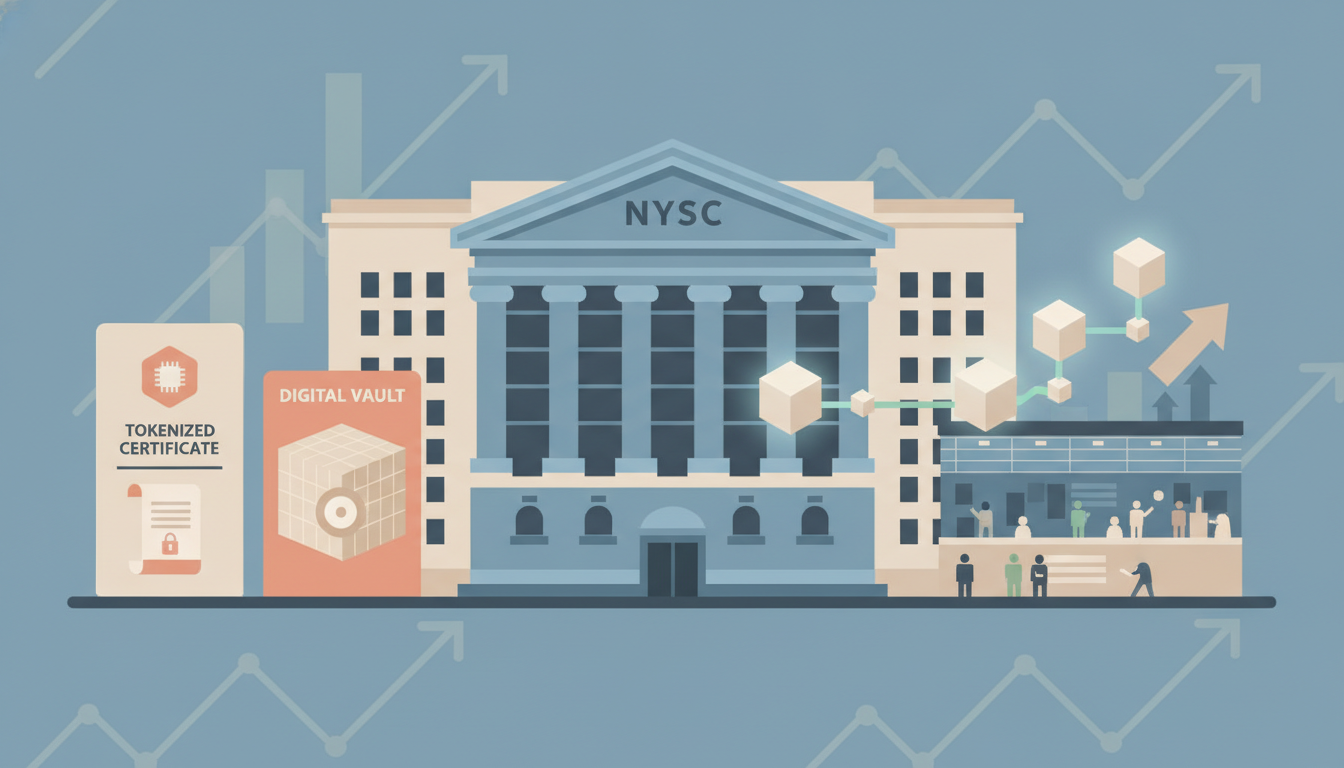
Tokenized stocks on blockchain just moved from experiment to infrastructure in the span of a single week — and the institutions showing up aren’t fringe players. The New York Stock Exchange, Robinhood, and a clutch of crypto-native venues all made significant moves in November 2026, each betting on a different piece of the same thesis: that equity trading’s future runs on-chain, around the clock.
That’s a lot of conviction arriving at once. Whether it’s coordinated momentum or a classic case of FOMO among incumbents, the architecture being laid down right now will matter enormously to anyone trading stocks or crypto over the next five years.
NYSE Chooses Avalanche — With a Catch
The headline that landed hardest: NYSE has picked Avalanche as the core ledger technology for the clearing firm behind its affiliated tokenized-securities platform. According to Decrypt, Ava Labs confirmed Avalanche will handle clearing and settlement for what’s designed to be a 24/7 trading environment — the kind of always-on market structure crypto traders take for granted but equity markets have never offered.
That’s genuinely significant. Settlement is the unglamorous plumbing of financial markets, and whoever controls it controls the rails. NYSE isn’t just experimenting with blockchain optics here — they’re committing their clearing infrastructure to a specific network. That’s a vote of confidence that Avalanche desperately needed after a couple of years of being overshadowed by Solana in the developer mindshare wars.
But read the fine print. CryptoSlate noted that the platform bans direct wallet access — meaning retail investors won’t be connecting MetaMask to trade NYSE-listed tokenized equities anytime soon. Distribution still flows through traditional brokers. So yes, it’s on-chain settlement, but it’s on-chain settlement with a velvet rope. And as CryptoPotato clarified, stocks can still be listed across multiple blockchains — Avalanche just owns the settlement layer, not the whole stack. Regulatory approval is still pending, so none of this is live yet.

Solana Gets Its First Real Tokenized Equity Venue
While NYSE was picking Avalanche for settlement, Solana was quietly landing its own institutional moment. Formation Securities has formally notified the SEC of its intent to operate what would be the first tokenized stock venue built on Solana under an SEC framework — specifically the agency’s Innovation Exemption. The launch is targeted for early 2027, with initial listings including tokenized shares of Galaxy Digital, Exodus Movement, and Forward Industries.
What makes this more than a press release is the rights structure. Decrypt reported that tokenized shares on the Formation platform would carry the same voting and dividend rights as conventional stock. That’s the missing piece that most tokenized asset experiments have glossed over — you can wrap a stock in a token all day, but if the holder can’t vote or receive dividends, it’s a derivative in a trench coat, not genuine ownership.
Cointelegraph and The Block both emphasized the 24/7 trading angle, which is the obvious draw for retail. The initial ticker selection is niche — Exodus and Forward Industries aren’t exactly S&P 500 names — but Galaxy Digital gives it some institutional credibility. Formation is essentially running a pilot with assets that are already comfortable in crypto-adjacent territory. Smart staging, even if the venue’s real test will come when it tries to list something mainstream.
SOL is trading at $85.32 as of this writing, down slightly on the day. The Formation news hasn’t moved the price meaningfully, which tells you the market is treating this as a 2027 story, not a 2024 catalyst. That’s probably the right read.
Robinhood Goes the Other Way — and That’s Actually Interesting
The most underappreciated development of the week is Robinhood’s decision to actively support the tokenization of its own stock on the OKX-ICE platform. CoinDesk flagged that most companies have opted out of this kind of arrangement — which makes Robinhood’s opt-in notable. This isn’t a company being dragged onto a blockchain because its exchange partner asked nicely. Robinhood is leaning into it.
There’s a logic here that’s worth spelling out. Robinhood’s brand is democratized access. Tokenized stock, in theory, extends that thesis globally — anyone with a crypto wallet could hold HOOD shares with full rights, without needing a US brokerage account. That narrative is consistent with Robinhood simultaneously launching commission-free IPO access for UK retail investors. The company is clearly trying to build a cross-border retail equity product, and tokenization is a tool in that strategy rather than a gimmick.
OKX’s involvement is worth watching here. The exchange has been methodically building toward institutional-grade infrastructure, and a partnership with ICE — the Intercontinental Exchange, NYSE’s parent — signals it’s playing a longer game than pure crypto trading volume. If you’re active on OKX and want to understand what that platform is positioning toward, our OKX referral code page has current sign-up offers worth checking before the platform’s equity features go live.

Who Actually Wins This Infrastructure Race?
Here’s what I think is getting lost in the coverage: these three developments — NYSE-Avalanche, Formation-Solana, Robinhood-OKX — aren’t really competing with each other. They’re solving different parts of the same problem from different angles. NYSE is attacking settlement infrastructure for institutional venues. Formation is building a retail-accessible trading layer with regulatory cover. Robinhood is using tokenization as a distribution mechanism for its own equity and retail growth strategy.
The more interesting competitive tension is between blockchains. Avalanche landing NYSE’s settlement is a meaningful win, but it’s a walled garden — no direct wallet access, broker-distributed, pending regulatory sign-off. Solana’s Formation venue is more open-access by design but starts with obscure tickers and a 2027 launch target. These are genuinely different product philosophies, and I don’t think one is obviously superior at this stage.
What I’d watch for is whether NYSE’s regulatory approval comes through before or after Formation’s Innovation Exemption-based platform goes live. If Formation launches first and demonstrates that 24/7 on-chain equity trading works without breaking markets, it creates serious pressure on NYSE to loosen the wallet restrictions that are currently limiting the platform’s crypto-native appeal.
For anyone tracking the broader tokenized asset space, our crypto news and market insights hub covers these infrastructure developments as they progress toward launch.
My Actual Take: This Is Real, But Don’t Rush the Trade
I’ve watched enough cycles to know when something is genuine structural change versus marketing dressed as innovation. This week feels like the former — NYSE doesn’t put its clearing infrastructure on a public blockchain for a press release, and Robinhood doesn’t opt into tokenizing its own stock without internal conviction. These are real commitments with real legal and operational weight behind them.
That said, I’d resist the urge to trade this as a near-term catalyst. Regulatory approval pending on the NYSE-Avalanche side. Formation doesn’t launch until early 2027. The Robinhood-OKX platform is live but adoption is unproven. The gap between infrastructure announcement and working product in tokenized equities has historically been 18 to 36 months. The smart positioning here isn’t buying AVAX or SOL on the news — it’s watching which venue actually executes, attracts liquidity, and builds out its ticker list beyond Galaxy Digital. The first platform to list Apple or Microsoft on-chain with genuine voting rights is when this story becomes a market event. We’re not there yet, but for the first time, I actually believe we will be.
Popular Exchange Referral Codes
- Bybit Referral Code 2026: Get 20% Fee Discount for 90 Days with Code 19670
- Bitget Referral Code 2026: Get 20% Trading Fee Discount with Code t4685009
- OKX Referral Code 2026: Get 20% Trading Fee Discount with Code 64912533
- HTX Referral Code 2026: Get 20% Trading Fee Discount with iddq7223
- Gate.io Referral Code 2026: Get a 20% Trading Fee Discount with Code NZRAPCBW
