
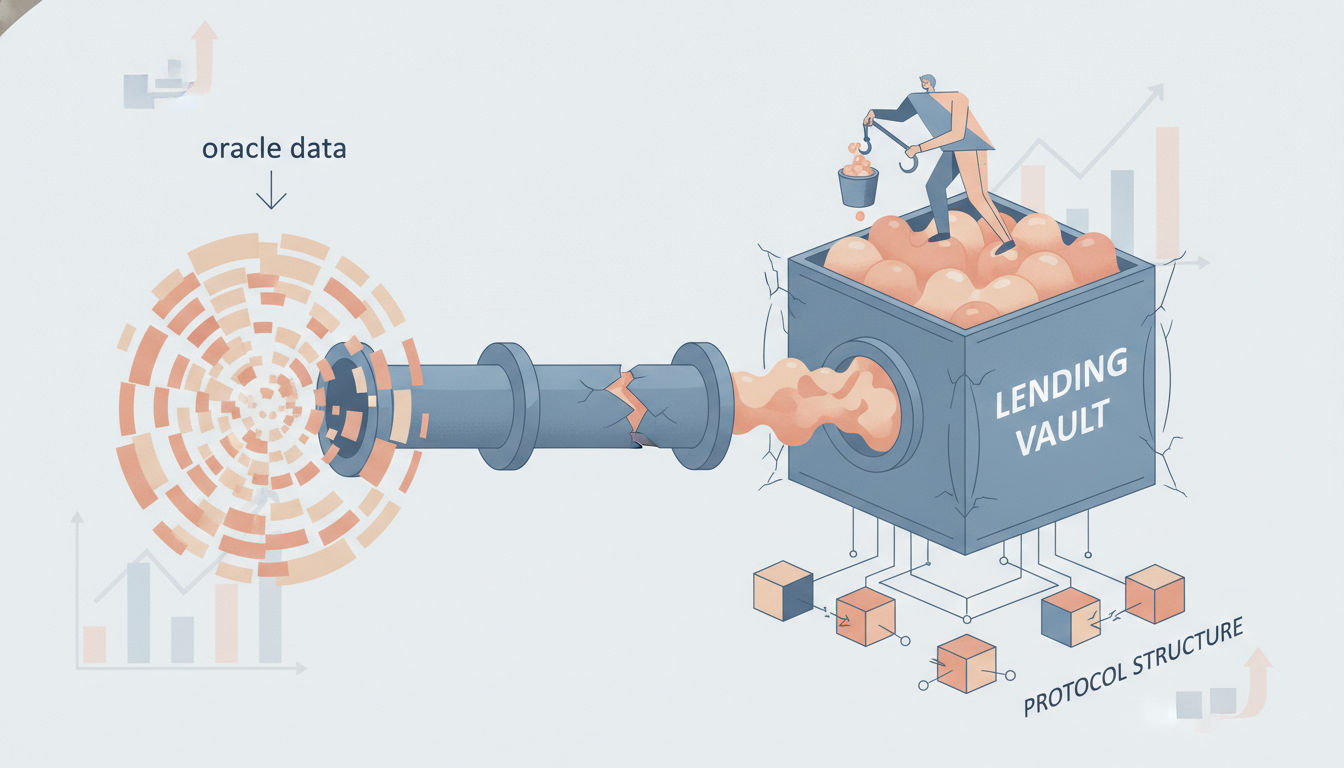
Bonzo Lend Oracle Exploit Drains $9 Million From Hedera’s Largest Lending Protocol
The Bonzo Lend oracle exploit has delivered one of the most damaging DeFi attacks of 2025, wiping out roughly 77% of the protocol’s total value locked in a single incident rooted in a manipulated price feed. What makes this attack particularly alarming isn’t just the dollar figure — it’s the clean surgical precision with which an attacker turned a trusted oracle verifier into a weapon.
What Happened: How the Attack Unfolded
At the center of the exploit is a flaw in Supra’s onchain oracle verifier — the mechanism Bonzo Lend relied upon to price collateral assets accurately. According to Cointelegraph, the attacker inflated the value of SAUCE token collateral by feeding manipulated price data through Supra’s verifier, which accepted the corrupted update without flagging it. With SAUCE artificially overvalued, the attacker borrowed approximately $9 million against collateral that was worth a fraction of that in real market terms.
The mechanics here follow a well-worn DeFi exploit playbook — inflate collateral, borrow against it, exit before liquidation catches up — but the entry point was novel and arguably more troubling than a typical smart contract bug. The vulnerability lived in the oracle infrastructure layer, not in Bonzo’s own code, raising uncomfortable questions about how much any lending protocol can trust external price feeds.
The Block adds an unusual wrinkle to the story: a second wallet drained roughly $1 million through the same vulnerability but publicly identified itself as a white hat hacker, stating the funds would be returned. This kind of parallel white hat intervention during an active exploit is increasingly common in DeFi — it’s part vigilante rescue, part competitive salvage operation — but it underscores just how wide open the attack surface was during that window.
CoinDesk frames the broader damage in stark terms, noting that Bonzo Lend lost 77% of its total value locked — a figure that signals not just financial loss but potential collapse of user confidence in the protocol and, by extension, in Hedera’s DeFi ecosystem more broadly.

Why It Matters: Oracle Risk Is the DeFi Industry’s Unresolved Debt
The Bonzo Lend oracle exploit isn’t a one-off technical failure — it’s a recurring category of vulnerability that DeFi has never fully solved. Lending protocols live and die by the accuracy of their price feeds. When those feeds can be manipulated at the verifier layer, every collateral ratio and liquidation threshold in the system becomes a fiction. The attacker didn’t need to break Bonzo’s smart contracts. They just needed Supra’s verifier to nod along.
For Hedera specifically, this is a significant reputational hit. The network has positioned itself as an enterprise-grade, high-performance alternative to Ethereum, with institutional trust and throughput as its core selling points. A $9 million exploit rattling its flagship lending protocol sends exactly the wrong signal to the institutional audience Hedera courts.
For DeFi users broadly, this is a reminder that due diligence on protocol security must now include the oracle stack, not just the lending contract itself. Before depositing assets into any lending protocol, experienced traders check the audit history, the liquidation parameters, and — increasingly — which oracle provider is used and how that provider validates incoming price data. That checklist just got longer.
If you’re evaluating DeFi-adjacent platforms or on-chain trading tools, browsing our exchange reviews and comparisons can help you identify platforms with stronger security track records and more transparent risk disclosures.
Market Context: DeFi Pain Against a Cautious Macro Backdrop
The exploit lands at a moment when crypto markets are showing limited appetite for risk. Bitcoin is trading at $63,954, down a modest 0.21% over the past 24 hours — range-bound and unconvincing for bulls hoping for a sustained move. Ethereum sits at $1,804, up 0.51%, but that marginal green day does little to offset the sector’s broader caution. Solana is at $76.59, off 1.39%, continuing to bleed from recent highs.
In this kind of flat-to-soft market environment, high-profile DeFi exploits tend to amplify fear rather than get absorbed as isolated incidents. Users who might otherwise tolerate protocol risk in a bull market are quicker to withdraw liquidity and seek safety when the macro backdrop is already shaky. For Bonzo Lend’s remaining depositors, the timing couldn’t be worse.
The attack also hits at a moment when Hedera’s native HBAR token has been working to rebuild momentum. A major exploit on the network’s most prominent lending platform is the kind of headline that can reset that progress overnight.

What Different Outlets Are Saying: Three Angles on the Same Attack
Coverage of the Bonzo Lend incident varies meaningfully across outlets, and reading them together gives a fuller picture than any single report.
CoinDesk: The Network-Level Impact
CoinDesk leads with the macro damage — 77% TVL lost — and frames the story as something that rattles Hedera as a network, not just Bonzo as a protocol. Their angle is less about the technical mechanics and more about what this means for Hedera’s credibility as a DeFi destination. That framing matters for institutional readers and potential ecosystem partners weighing deployment decisions.
Cointelegraph: The Oracle Mechanism
Cointelegraph goes deeper into the technical root cause, zeroing in on the Supra oracle verifier as the attack vector. Their reporting treats this as an oracle story first and a Bonzo story second — which is arguably the more important framing for the industry. As Cointelegraph put it:
「an attacker inflated the value of SAUCE collateral and borrowed $9 million through a flaw in Supra’s onchain oracle verifier.」
That sentence is a blueprint for how this class of attack works — and a warning for every protocol using similar infrastructure.
The Block: The White Hat Subplot
The Block is the only outlet to highlight the competing wallet that extracted roughly $1 million and claimed white hat status, promising to return funds. This detail changes the story’s texture considerably. It suggests multiple sophisticated actors were monitoring the exploit in real time — and that not all of them were purely malicious. Whether the white hat funds are actually returned will be a significant data point about the integrity of that claim.
Trader Takeaway: Oracle Risk Deserves a Line Item in Your Due Diligence
From a veteran trader’s perspective, the Bonzo Lend oracle exploit is a case study in why trust in DeFi infrastructure must be earned at every layer, not assumed because the lending contract passed an audit. Oracle providers are now as important to evaluate as the protocols themselves — and any lending platform that can’t explain how its price feeds are validated deserves extra scrutiny before you deposit. For those actively using DeFi platforms alongside centralized exchanges, exploring the latest crypto security and market news is essential for staying ahead of emerging exploit patterns before they hit your portfolio.
Popular Exchange Referral Codes
- Bybit Referral Code 2026: Get 20% Fee Discount for 90 Days with Code 19670
- Bitget Referral Code 2026: Get 20% Trading Fee Discount with Code t4685009
- OKX Referral Code 2026: Get 20% Trading Fee Discount with Code 64912533
- HTX Referral Code 2026: Get 20% Trading Fee Discount with iddq7223
- Gate.io Referral Code 2026: Get a 20% Trading Fee Discount with Code NZRAPCBW


