
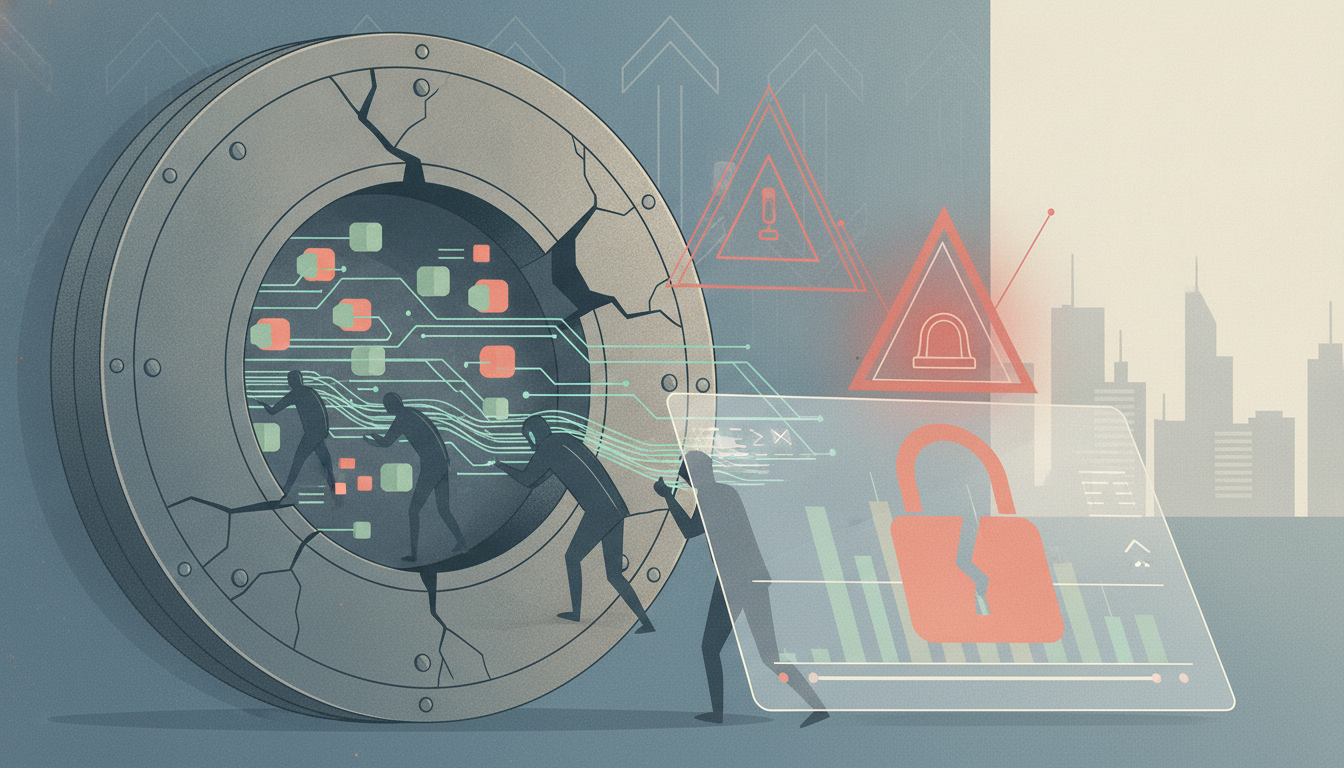
The Binance $6.3 billion hack didn’t just rattle one exchange — it sent shockwaves through every layer of the crypto industry, from rival CEOs scrambling to publish cold wallet percentages to U.S. bank regulators quietly picking up the phone. What’s unfolding now is a stress test nobody scheduled, and the results are telling.
TraderTraitor Pulled Off Something Nobody Should Have Been Able to Pull Off
The group behind the breach, identified by researchers as TraderTraitor, is the same North Korea-linked hacking squad that CoinDesk has tracked through multiple major exchange compromises. These aren’t opportunistic script kiddies. TraderTraitor operates with the patience and precision of a nation-state intelligence operation — because that’s essentially what it is. They’ve refined their playbook over years, and Binance, the largest exchange by volume on the planet, still fell for it.
That framing matters. Too many post-mortems in this space treat nine-figure hacks like bad luck. This wasn’t bad luck. It was a sophisticated, sustained campaign against an institution with enormous resources and a full security team. If Binance can get hit for $6.3 billion, the question every other exchange CEO should be asking is not “are we better than Binance?” — it’s “how long until someone runs the same playbook on us?”

The Cold Storage Race Everyone Suddenly Wants to Win
Within days of the hack, something predictable happened: exchanges started flexing their cold storage numbers like they were gym selfies. Cointelegraph reported that Coinbase claims to keep more than 99% of customer assets offline, while Gate reported 88.26% of its total assets in cold storage. Gate’s CEO went further, telling CoinDesk that exchanges must now prove they can survive exactly this kind of attack — not just claim they can.
That’s a reasonable position, and I actually respect the directness. But I’ll say what most outlets are tiptoeing around: publishing a cold storage percentage after a competitor’s catastrophic hack is marketing, not proof. Proof requires transparent, third-party-verified proof-of-reserves with liability attached. A number on a press release is just a number. Gate’s CEO is right that exchanges need to demonstrate resilience — but the industry keeps confusing asserting security with demonstrating it. Those are very different things, and sophisticated traders know the difference.
If you’re evaluating where to hold significant positions right now, our rundown of current exchange referral offers and fee structures includes notes on platforms with verified reserve disclosures — worth checking before moving significant capital anywhere.
The SignalPlus Incident Is a Separate Fire, But It Burns the Same Way
Barely a week after the main event, Binance cut off API access for SignalPlus after flagging a potential security issue at the trading platform. Cointelegraph confirmed that Deribit also revoked SignalPlus API keys, and that the vector was a fake Microsoft Teams invite used to compromise an engineer’s machine. Losses were reportedly under $82,000 — tiny in absolute terms — but the method is what should concern you.
Decrypt noted that Binance confirmed its own systems were unaffected, but CryptoPotato pointed out the practical consequence: every trade, monitor, and bot SignalPlus ran on Deribit stopped cold. That operational disruption — not the dollar figure — is the real risk signal here. API integrations are the connective tissue of modern crypto trading infrastructure, and a single compromised endpoint can freeze operations across multiple venues simultaneously. That’s not a theoretical concern. It just happened.
The TraderTraitor playbook and the SignalPlus attack share a core method: social engineering aimed at humans, not brute-forcing systems. No amount of cold wallet percentage bragging fixes that vulnerability. It’s a people problem as much as a technology problem.

When the Fed Starts Calling Banks, the Story Has Left Crypto Twitter
Here’s where this gets genuinely significant for the broader market. Cointelegraph reported that U.S. regulators — specifically the Federal Reserve and the OCC — reached out to banks following the hack to check for crypto-related vulnerabilities. Bitcoin Magazine confirmed the same regulatory outreach, framing it as supervisors actively probing bank exposure to crypto counterparty risk.
That’s not routine. When bank supervisors start calling their institutions specifically in the wake of a crypto exchange hack, they’re signaling that they view crypto exchange risk as systemic enough to potentially affect regulated banking infrastructure. That’s a materially different posture than the typical “crypto is risky, be careful” boilerplate. It suggests some banks have more direct or indirect exposure to Binance — through custodial arrangements, payment rails, or counterparty credit — than the public generally appreciates.
And then there’s the Chainalysis situation, which got far less attention than it deserved. Cointelegraph reported that Chainalysis disclosed password hashes and live tokens were exposed in a breach — after initially claiming only non-sensitive data was accessed. That revision is a serious credibility problem. Chainalysis is effectively the intelligence layer of on-chain compliance for a significant portion of the industry. If their own security posture is being misrepresented in initial disclosures, that matters far beyond their own user base.
The pattern across the SignalPlus incident, the Mercado Bitcoin situation — where CoinDesk found the hack continued hours after the exchange claimed it was contained — and Chainalysis’s amended disclosure is consistent: institutions are systematically underreporting breach severity in real time. That’s not just a PR problem. It’s an information problem for everyone trying to make risk decisions in live markets. For a broader view of how this week’s events fit into the ongoing security conversation across the industry, our crypto news and market insights hub has continued coverage worth bookmarking.
My Actual Take After Watching This Industry for Two Decades
BTC is down over 5% in the last 24 hours, ETH nearly 7%, SOL dropping past 6.5% — and while I won’t attribute all of that to the Binance fallout, the timing is not coincidental. Hacks of this magnitude shake confidence in custodied holdings, and confidence is what moves price in the short term more than fundamentals do.
Here’s what I’d actually do right now. First, audit every API key you have active across any exchange or trading platform — not because you’re definitely compromised, but because the SignalPlus incident proved that third-party tools connected to your accounts are attack surfaces you’ve essentially outsourced to someone else’s security team. Revoke anything you’re not actively using. Second, treat any exchange’s post-hack security announcement with deep skepticism until there’s a third-party audit attached to it. The gap between what institutions say immediately and what actually happened — as Mercado Bitcoin and Chainalysis both demonstrated — is wide enough to drive a truck through. Third, the regulatory escalation from the Fed and OCC tells me that institutional-grade compliance requirements for crypto exchanges are coming faster than the industry wants to admit. Exchanges that get ahead of that — with real, verifiable security practices, not press releases — are the ones worth building relationships with long-term. The ones that compete purely on fees and leverage while treating security as a marketing line item are going to have a very bad next 18 months.
The Binance hack isn’t a black swan. It’s a proof of concept that well-funded, state-linked actors can breach the most resourced exchange in the world. The correct response to that isn’t a cold storage percentage. It’s a fundamental rethink of how much trust any single custodian deserves.
Popular Exchange Referral Codes
- Bybit Referral Code 2026: Get 20% Fee Discount for 90 Days with Code 19670
- Bitget Referral Code 2026: Get 20% Trading Fee Discount with Code t4685009
- OKX Referral Code 2026: Get 20% Trading Fee Discount with Code 64912533
- HTX Referral Code 2026: Get 20% Trading Fee Discount with iddq7223
- Gate.io Referral Code 2026: Get a 20% Trading Fee Discount with Code NZRAPCBW
