

US-UK Regulatory Alignment on Tokenization and Stablecoins Sets a New Global Standard
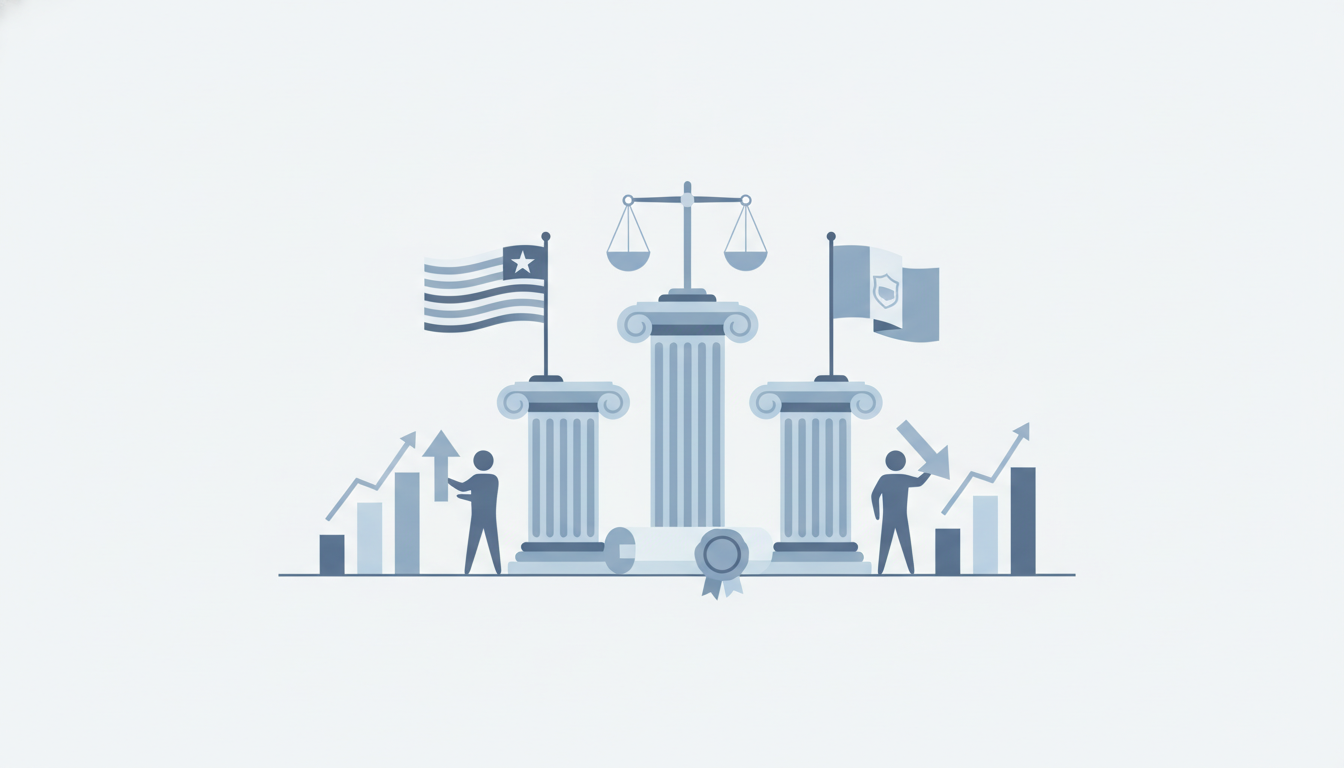
US-UK regulatory alignment on tokenization and stablecoins is no longer a back-channel conversation — it is now a coordinated policy push with real deadlines and real market consequences. Two of the world’s most powerful financial regulators are moving in lockstep on digital assets, and the framework they build together will shape how tokenized finance operates globally for the next decade.
What Happened: A Transatlantic Roadmap Takes Shape
The U.S. and UK treasuries have jointly unveiled a digital asset roadmap through a newly established transatlantic taskforce, targeting alignment on the rules governing stablecoins and tokenized financial instruments. The timing is deliberate: the U.S. is actively preparing to implement its 2025 payment stablecoins law, and both governments want their frameworks synchronized before that legislation takes full effect.
According to The Block, the taskforce is deepening cooperation specifically around stablecoins and tokenized assets, framing the effort as a pro-innovation initiative rather than a restrictive crackdown. The recommendations issued by both governments address how digital assets should be treated under each jurisdiction’s evolving legal structure — a critical issue for institutions operating across both markets simultaneously.
Cointelegraph notes that both governments issued formal recommendations on digital asset treatment as part of this broader effort, with the stablecoin framework taking center stage given the imminent U.S. legislative rollout. Meanwhile, CoinDesk frames the initiative as an attempt to align rules across the world’s largest financial markets — a framing that signals ambition well beyond bilateral housekeeping.
The scope covers tokenized securities, payment stablecoins, and broader digital asset infrastructure, with both sides aiming to reduce regulatory friction for institutions that move capital between London and New York — still the two most systemically important financial centers on the planet.
Why It Matters: Institutional Tokenization Just Got a Green Light
This is not theoretical. When the U.S. and UK align on financial regulation, the rest of the world tends to follow or at least accommodate. The EU’s MiCA framework is already live, but a coordinated Anglo-American approach carries institutional weight that Brussels simply cannot match in terms of raw capital flows and market depth.
For institutional players — banks, asset managers, custodians — regulatory uncertainty has been the single biggest barrier to deploying tokenized asset strategies at scale. A joint framework removes the compliance arbitrage problem: firms will no longer need to maintain two entirely separate legal interpretations of what a tokenized bond or a dollar-backed stablecoin actually is under the law.
The stablecoin dimension is particularly significant. The U.S. GENIUS Act, the 2025 payment stablecoins legislation referenced across all three outlets, creates a federal licensing path for stablecoin issuers. If the UK aligns its own rules to be compatible — not identical, but interoperable — then sterling-backed and dollar-backed stablecoins could circulate across both jurisdictions without triggering a compliance nightmare at every transaction layer.
Traders and DeFi builders should pay close attention to the tokenization angle. Tokenized Treasuries, money market funds, and real-world assets are already a multi-billion dollar segment. A clearer regulatory runway in both the U.S. and UK could accelerate institutional inflows into these products significantly — and that capital has to live somewhere on-chain. For context on how exchange-level access to these emerging asset classes is evolving, our crypto news and market insights hub tracks developments as they break.
Market Context: Crypto Prices Feeling the Macro Optimism
At the time of writing, broader crypto markets are reflecting a cautiously risk-on tone that aligns with the regulatory clarity narrative. Bitcoin is trading at $64,680, up 3.25% in the last 24 hours. Ethereum is outperforming at $1,873, up 4.92% — notable given ETH’s direct exposure to tokenization narratives through its role as the dominant smart contract settlement layer. Solana is holding at $77.60, up 3.33%.
The ETH move is worth watching specifically in the context of this news. Tokenized real-world assets and institutional stablecoin infrastructure are disproportionately built on Ethereum and Ethereum-compatible networks. Any acceleration in institutional adoption driven by clearer U.S.-UK rules would likely funnel demand through ETH-based infrastructure first. The 4.92% daily gain may be pricing in some of that expectation.
Solana’s participation in the rally is also relevant — several stablecoin and tokenization projects have launched or expanded on Solana in 2024-2025, and any clarity on the regulatory treatment of payment stablecoins benefits the entire smart contract ecosystem, not just Ethereum.

What Different Outlets Are Saying: Three Angles on the Same Story
CoinDesk: Global Ambition, Not Just Bilateral Housekeeping
CoinDesk leads with the geopolitical scale of the move, emphasizing that these are the world’s largest financial markets coordinating, not just two friendly governments exchanging policy memos. The implicit argument is that this sets a de facto global standard — other jurisdictions will need to decide whether to align, diverge, or be left behind in the institutional tokenization race.
Cointelegraph: The Stablecoin Law Is the Catalyst
Cointelegraph anchors its coverage in the legislative reality: the U.S. has a stablecoin law coming into effect and both governments are racing to ensure their frameworks do not conflict.
“The two governments issued recommendations on the treatment of digital assets,” — Cointelegraph
This framing positions the alignment as reactive to U.S. domestic legislation, which gives it a slightly different urgency than CoinDesk’s more strategic read.
The Block: Innovation-First Framing
The Block emphasizes that the taskforce is explicitly promoting stablecoin innovation, not just managing risk. This is a meaningful distinction. Regulators framing themselves as pro-innovation tend to produce frameworks that leave more room for new entrants and novel product structures — a detail that matters enormously for DeFi builders and fintech startups operating in both markets.
Trader Takeaway
Twenty years of watching macro policy intersect with financial markets has taught one consistent lesson: when the U.S. and UK coordinate on financial regulation, it is rarely the last move — it is usually the first domino. Traders positioned in tokenized RWA protocols, stablecoin infrastructure tokens, and ETH-adjacent DeFi will want to monitor how quickly institutional capital responds to this framework clarity over the coming quarters. For those looking to access these markets efficiently and manage trading costs, comparing current exchange referral offers and fee discount programs is a practical first step before scaling up exposure.
Popular Exchange Referral Codes
- Bybit Referral Code 2026: Get 20% Fee Discount for 90 Days with Code 19670
- Bitget Referral Code 2026: Get 20% Trading Fee Discount with Code t4685009
- OKX Referral Code 2026: Get 20% Trading Fee Discount with Code 64912533
- HTX Referral Code 2026: Get 20% Trading Fee Discount with iddq7223
- Gate.io Referral Code 2026: Get a 20% Trading Fee Discount with Code NZRAPCBW


