

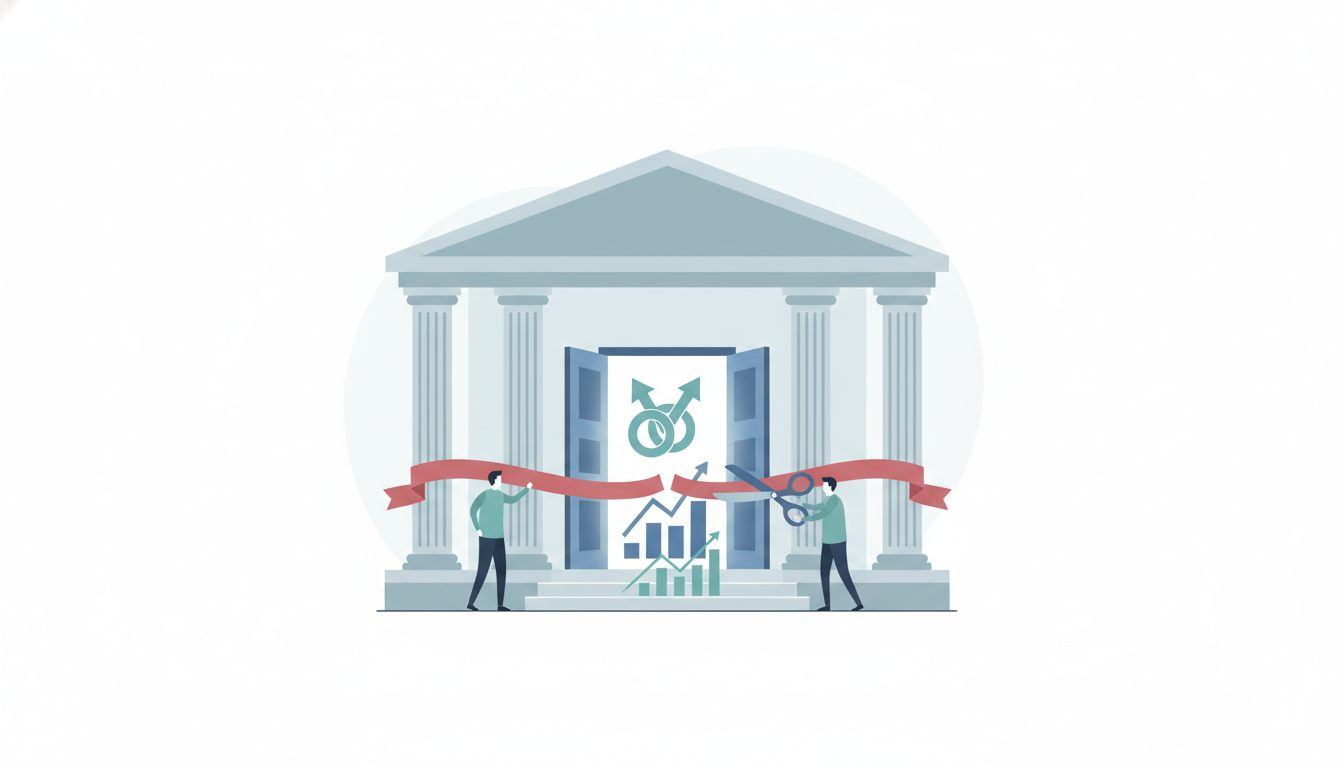
The CFTC just kicked open a door Washington had kept locked for years. On May 28, the Commodity Futures Trading Commission cleared the first U.S.-regulated path for crypto perpetual futures — a product that’s printed billions in offshore volume but never had a legitimate American home. Kalshi gets to list BTCPERP, and Coinbase gets staff-level relief to route U.S. customers into global perp markets. This is the regulatory pivot perps traders have been waiting on since 2017.
What Happened
The CFTC issued two parallel actions on the same day. First, it approved KalshiEX LLC’s BTCPERP contract as a futures product on a CFTC-registered designated contract market, making it the first U.S.-listed bitcoin perpetual futures contract. Second, it granted Coinbase Financial Markets a no-action letter allowing the exchange to provide U.S. customers access to certain offshore perpetual products, specifically tied to Deribit’s venue.
According to CoinDesk’s reporting, the dual move represents the agency’s first formal acknowledgment that perpetual swaps — contracts with no expiry, settled via funding rates — can exist inside the U.S. regulatory perimeter. The Commission also published a separate advisory addressing operational expectations for 24/7 trading, which Cointelegraph noted covers risk management, surveillance, and clearing during weekend sessions.
For Coinbase, the relief is narrower than a full domestic listing. As Decrypt explained, U.S. customers are being routed into offshore liquidity rather than getting a brand-new domestic order book. Kalshi, by contrast, is launching a true onshore product starting with Bitcoin.
Why It Matters
Perpetual futures are the single most-traded instrument in crypto globally — Binance, Bybit, and OKX have built empires on them. Until now, U.S. retail had to choose between cash-margined CME futures (expiring, capital-inefficient) or VPN-and-pray access to offshore venues. The CFTC’s move collapses that gap.
There’s a structural implication too. By treating perps as futures contracts rather than swaps, the CFTC sidesteps a years-long jurisdictional debate. It also pressures the SEC, which has dragged its feet on equivalent spot and derivatives clarity. If Kalshi can list BTCPERP under DCM rules, ETH and SOL perps are almost certainly next in the queue — and competing DCMs will file fast.
Market Context
The reaction in spot markets has been muted but constructive. Bitcoin is trading at $73,438, essentially flat at +0.03% on the day. Ether sits at $2,011.14 (+0.22%), and Solana at $82.40 (+0.71%). That’s not a regulation-rally — it’s the market pricing in a structural change that won’t fully express until volume migrates.
The real impact shows up in derivatives flow, not spot tape. Expect open interest on offshore perp venues to start leaking toward U.S.-regulated alternatives over the next two quarters, particularly from institutional desks that couldn’t touch Binance or Bybit for compliance reasons. CME’s BTC futures complex — which has dominated U.S. institutional crypto exposure since 2017 — now has its first real domestic competition.
What Different Outlets Are Saying
Coverage angles split along predictable editorial lines. The Block framed it as a procedural opening — the CFTC clearing the runway for two specific firms — without overplaying the broader market implications. Clean, factual, no editorializing.
Bitcoin Magazine struck a more triumphant tone, describing the order as a green light that opened the door for Coinbase to route American traders into global crypto derivatives markets. Predictable for the publication, but accurate on the substance.
CryptoSlate flagged the caveat most other outlets glossed over: this is a US-regulated test case, not a wholesale market opening. The Kalshi contract has to actually attract liquidity, and Coinbase’s offshore-routing arrangement depends on Deribit’s cooperation and ongoing CFTC comfort with the structure.
Decrypt published two separate pieces — one on Kalshi, one on Coinbase — which is the right call given the actions are technically distinct. The Coinbase piece emphasized the risk profile of leveraged perps for retail, a tone Cointelegraph echoed via the 24/7 trading advisory angle.
What’s notably absent from most coverage: any discussion of leverage caps, margin requirements, or how funding rates will be calibrated on Kalshi’s BTCPERP versus offshore equivalents. Those details will determine whether the product actually competes.
Where Offshore Venues Fit Now
The offshore giants — OKX, Bybit, Bitget, BingX — still hold the vast majority of global perp liquidity, and that won’t change overnight. U.S. compliance constraints aside, their fee structures, leverage tiers, and listing speed remain hard to match. Traders interested in these exchanges can compare current referral offers on our exchange pages.
Trader Takeaway
This is a structural win, not a trading catalyst. The interesting trade isn’t long BTC on the headline — it’s watching how quickly liquidity bifurcates between Kalshi’s onshore book, Coinbase’s Deribit-routed flow, and the offshore incumbents. If you’re a U.S. trader who’s been stuck with CME’s expiring contracts or sketchy VPN setups, your toolkit just expanded materially. Just don’t confuse regulatory blessing with reduced risk — perps are still perps, and funding rates don’t care which jurisdiction printed your contract.
Popular Exchange Referral Codes
- Bybit Referral Code 2026: Get 20% Fee Discount for 90 Days with Code 19670
- Bitget Referral Code 2026: Get 20% Trading Fee Discount with Code t4685009
- OKX Referral Code 2026: Get 20% Trading Fee Discount with Code 64912533
- HTX Referral Code 2026: Get 20% Trading Fee Discount with iddq7223
- Gate.io Referral Code 2026: Get a 20% Trading Fee Discount with Code NZRAPCBW


